|
If you're an author, you'll hear a lot of advice about making the majority of your books link together into a series. Preferably a long series, perhaps with connected novellas, prequels, and other perks. The reasons usually given are: that it's honestly easier to keep writing in a world that's already been created, spinning out more stories in that world, than to invent new worlds and characters from scratch every time; and also that it gives readers a feeling of continuity. They know pretty much what they are going to get from you because it's all in the same world, whereas if you do lots of standalone projects, lovely and unique as each might be, readers aren't sure they will have the same feelings about your new book as about your last one because it's simply 100% different.
Ease of writing--what I call "lazily churning out"--books isn't appealing for me, nor should it be to anyone who is thinking carefully. Readers can always tell when an author has put in a thorough effort and as a series or loose set of interconnected books, shorts, and prequels drags on they will recognize that dialed-in feeling. I read an interesting article recently, when I was looking up behind-the-scenes on The Man Who Shot Liberty Valance (a great old western, by the way.) When I scrolled down, I saw bits of an interview with two actors in the series Yellowstone, about what it was like to work with Kevin Costner. Kevin Costner has been around a long time. He made some of his famous movies when I was a kid. So by now he has been a household name for years. The others said they were surprised by how hardworking and humble he was. He never treated the production in a cavalier way, he was never arrogant, and he never expected to do less because he was a big star. The quality of the work remained as important to him as it was when he first started acting. The article clearly portrayed their respect for this man. So interconnecting my books because it's sheerly easier to get readers involved in the same world, with minimal effort from me, is definitely not my goal. BUT there is a good reason to link my books more closely. The reason is not author comfort, it's reader comfort. I've bounced all over the place in many genres and while I have certainly taken the time to work hard on each book, readers might not be sure what they're getting. (Other than that it is a quality story, of course.) Exactly what quality story, though? In a time when about 90% of books are a burn experience for readers--and trust me, I read a lot because I love books and I've been burned many, many times--trust is really important. (It's also true that many times I have loved a book I read, obviously, or I would not still be writing or reading now!) I've been mulling for a while now about how to connect my stories better. I do have one trilogy, but the rest are all stand-alones in different genres. How could I link them? The best way is of course to write a reader magnet--a story meant to be given away as a sample--because I need one anyway. In the past I've given away my actual books in place of a dedicated magnet and that's not a great strategy. For several months I've been planning to write a new story to be used promotionally that will link all my stories together through the element of time travel. Because I have historical eras I'll need a way to get those characters to interact with modern ones and since I have science fiction books, a character in one of them can find a time-travel machine. Time-travel also makes it possible to alter the ages of the characters so they can be older or younger or even meet an older version of themselves. The concept is for a few selected characters from each book to bump into each other using time-travel and then have an adventure together, with a small appendix in the back that lists which books they came from so you can read more about a character you really enjoyed in the sample. I'm also planning additional stories using the same idea (episodic adventures for my characters in time travel) to be sold as exclusive content on my website and I hope to add other products besides fiction into the webstore. I have been so busy I keep putting it off. I haven't found the time to just sit down and write a story these days. But I'm going to get this story written soon, so consider this announcement a prophecy of sorts. I will put up a short-term link for you to get the story when it's done. Its main purpose is to attract newsletter subscribers, after all, and to start readers off with a linked, connected view of all my stories and how they fit together. The download will expire quickly though so you'll want to snap it up when you open that email. And there will be more updates. Most people will only be nice to someone if they can profit from it. You’ve seen it. You know I’ve seen it too. So have all your friends and all my friends. Christians often say that God’s love is “unconditional” and for years that didn’t make a lot of sense to me. It didn’t sound very appealing because the phrase "unconditional love” implied there was such a thing as conditional love. Theoretically, conditional love shouldn't really exist. For love to be real it has to involve giving to someone else with a motive other than profit. But what people were trying to say is that we CALL a lot of things Love, Affection, or Caring, but it's not the real deal. “So-and-so is my best friend, my bestie best bestie”—until it benefits me to take something from them, bump them out to get a bigger platform on social media, or judge them to increase my own standing. “So-and-so is my spouse and we are unbelievably happy, praising each other all the time”—and they divorce a few years later. “So-and-so is my new favorite author or musician or actor”—until a while later you’ve never heard of them or even actively want them to quit producing material. The list could go on forever, but I won’t bore you with it. There are so many examples of manipulative behavior that feigns closeness but serves yourself. Best friend, praising someone else, or calling someone a favorite are forms of showing affection. And in this case conditional affection that evaporates in the face of a new opportunity. By contrast, a relationship with God or with anyone who really cares about you is sincere. However, ire, rage, and hostility can also be emotions that are insincere. Most find that hard to believe because they assume if something is negative it must be true! Perhaps it’s the personal threat of negativity. It makes us insecure, certain that the emotions are genuine because our vulnerability is genuine. Well, we might really be vulnerable, but that doesn’t mean that our critics mean what they say. Their criticism and accusations, like their love and friendship, can evaporate in a minute if they suddenly feel it’s expedient to be fond of us. 😉 For instance, it’s common these days to use absurdly intense labels to describe others, like racist, terrorist, or Nazi. People are shocked by literally everything. Almost everything is the next great threat to society and an emergency. But this does not mean that the people saying this really mean it. They are just getting all worked up because it helps them achieve their goals. They have Conditional Negativity, which is just like Conditional Friendship--a thing of the moment. This behavior creates great cynicism about any publicly stated opinions. For example, they might describe Russian president Vladimir Putin and a typical pedestrian on a small-town street corner exactly the same way (namely as a terrible danger to mankind) although Putin invaded another country and the typical pedestrian merely said something they didn't particularly like. As far as they're concerned the pedestrian is just as guilty of killing people as Putin is because they don't care what those words really mean. Frequent exhibitions of overblown, obviously motivated reactions on every topic make us just roll our eyes and feel that we can't believe what anyone says even if it is true. We now assume all the emotions shown are fake. It can be hard to trust people and to believe they have real feelings about you or about anyone else. 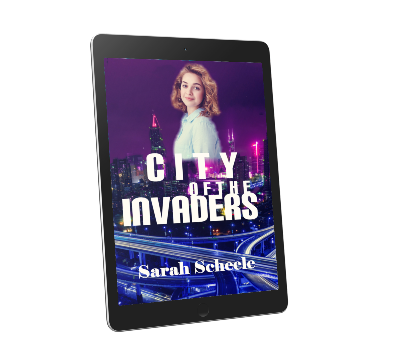 I didn’t think of it at the time, but when writing City of the Invaders I felt very far from the issues it explores and that’s something I’m proud of. I wanted to be free of ulterior motives when writing a very charged type of storyline. So I picked a scenario where I was an outside observer, unlike the protagonist Katia who is deeply tied to all the conflicts in the narrative. It’s an urban story, about subcultures within a mega-city and about a rather nasty divide that simmers between two groups that are always at war but have a lot in common. This story is likely to remind people of politics in real life and to create strong feelings. I knew readers believed I was personally invested in it (for instance, the little tidbits about performing on stage came from my real experiences, didn't they?) And if I had been invested, it wouldn't have been a good story at all. But things that tied into something I'd done weren't important memories of mine and the broader-reaching plot was remote from my preoccupations. As I look back on this book, I realize it was really pretty good. When certain situations are very complex, the worst thing you can do is to have too many opinions. A tale about a big city on the brink of war, written by a girl who always lived on a peaceful farm, was about as much creative distance as was humanly possible! 😛
My name is Katia. I’m the one who doesn’t fit in. It’s 2335 and people on Earth have been fighting in two clans for centuries. We’ve got colonies all over the solar system now—you know, those cities on Mars people have been planning to build like forever? I wish I had been born out there because they have no fighting between two groups that are essentially identical and won’t admit it. True, EC can read and don’t handle technology and for the Invaders it’s the opposite. But that's just a cosmetic difference over two sides who are similar in every other way. If you say that, though, you'll get in big trouble. I don’t live in one of those outer-space colonies. I live on Earth. And in the portion of Earth where I live, the former imperial regions, everybody is EC or Invader. Except me. Did you notice I haven’t told you which one I belong to? That’s right. Because I belong to both of them. And that means I really belong to neither. I’m the “weird kid.” The outcast. The one who does everything wrong. I'm not sure if they think getting involved in gangster politics and accidentally wrecking the opening night of a theater production counts as wrong. But that isn't going to keep me from doing it. And there will be more updates. When I was a little girl, I liked to see things upside down. Just for fun, of course—it was a game I played with a mirror. 😊 All it takes is a mirror to see the world in an entirely new way. For instance, classics like Through the Looking Glass have long ago discovered the efficacy of mirror-travel for exploring a young lady’s relationship to the world. I never saw much of myself in Alice although I had a nice big Alice in Wonderland book. And the small, streaky, quite prosaic utility mirror over our bathroom sink was a very serviceable piece of glass, but it was sensible in the extreme and it was hard to imagine a world behind it even if I had wanted to. Besides, it reflected pale daylight from a nearby window and always made me look bleached out. But I found that if I took a smallish rectangular mirror with rather sharp edges—no frame—that was lying in my mother’s things, I could hold it to my nose with the mirror facing up and everything up above looked as if I was walking right into it. Upside down, the ceiling of the porch, the now massive sky ringing it, and the puffy white clouds appeared, in an optical illusion, to be something I was about to walk into, to tip off into, in fact. I used to walk all over the porch because it seemed like the porch roof was a balcony and then it suddenly disappeared as I catapulted into sky that I could magically walk on! Then I walked off of it into a fantasy world of things reflected upside down in the mirror. This picture shows what I got out of it emotionally, how beautiful I thought it was--except for the ocean waves. I don't remember any of those in our sky! 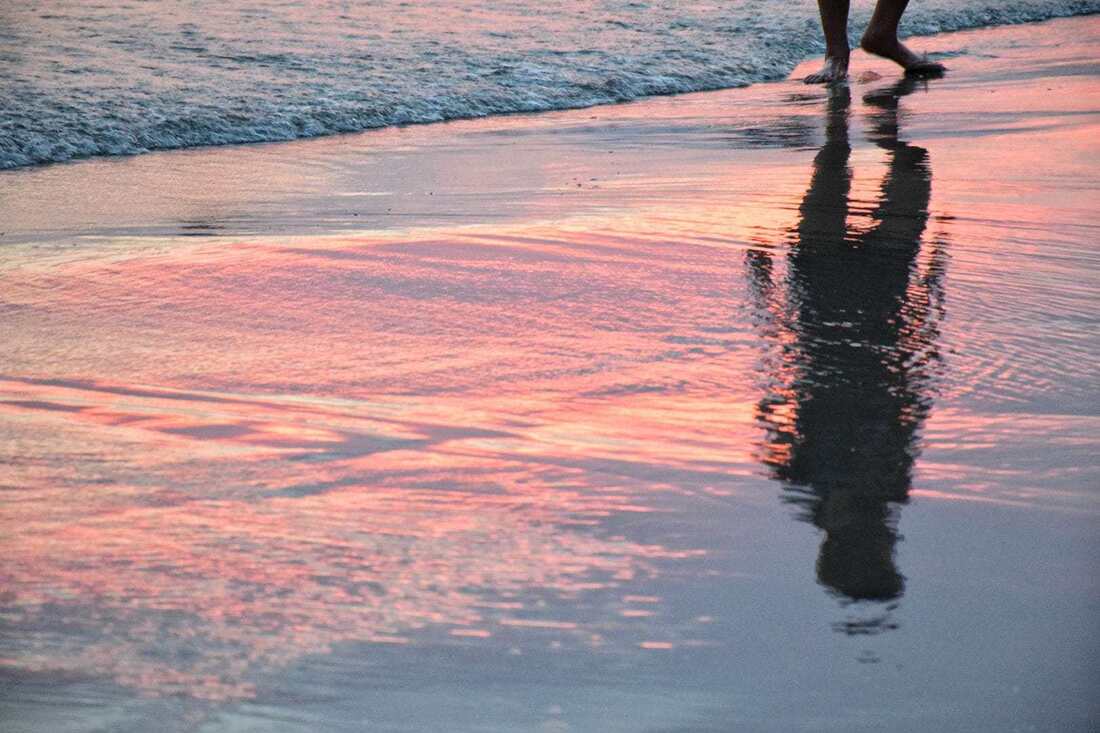 Victoria: A Tale of Spain was a book that I got 100% upside down at first. It was inspired by a trip to Europe. After all, how could I not use this wonderful opportunity that I had to see historic places? Many people haven’t had that chance to improve their writing. I HAD TO write a book about it, so I started by writing two separate stories. Gradually I sewed the two parts into one, but no matter what I did with it, Victoria: A Tale of Spain was a left shoe on a right foot. I was getting something wrong. Last year, I again wondered (for the millionth time) how to describe Victoria. It really seemed to offer nothing at all to my publications. Every element I could use to describe it applied to at least one of my other books—historical, drawn from places I’d known, juvenile audience, adventure, female protagonist. What did this book offer that was unique? But I did not have a memoir or a book that actually drew on my family experiences instead of just scenery and images of where I lived. Once I thought—“perhaps this is a disguised memoir, a sort of creative nonfiction. It’s really us dressed up in historical costumes and its characters are modern, rather than this truly being a book about historical times”—the story snapped into focus. And these elements, come to think of it, had been in the book all along. I would have seen that if I hadn't been looking at it from an alternative angle, like I used to look at the sky in that mirror as a child. 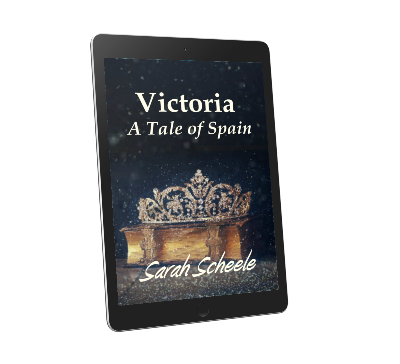 The trip itself—the fact I went to live with relatives that I barely knew for three months in foreign countries—WAS the story. I can’t stress enough that I did not know these relatives well at all and then I suddenly spent all my time with them. There was plenty of complexity in all the family relationships which is why other people who are influential to our interactions on the trip are also shown in Victoria. There was no reason to look for made-up historical drama when such a rich supply of it was already available from our real lives. 😊 The action is primarily in Spain since I was there the longest but the other places we toured appear as a mashup of glamorous public buildings at the end of the book. Except for Ireland, unfortunately because this Thursday was St. Patrick's Day, but this week's book passed Ireland like a ship in the night! I guess that brief visit wasn't very meaningful to any of us. It is the only place where I bought no souvenirs. To keep identities a bit private, some of the relationships, such as age or gender of siblings, have been fictionalized, and I have not included an appendix clarifying what character is meant to be who in real life. But I will say that all the characters are based on someone from my life and I based Isabelle and Anne on myself. (For better narrative flow they became distinct characters in the completed book, but in the original set of two separate stories they were one girl, named Mary, who appeared recurringly.) And since these characters are so real, it will be easy for readers to recognize them from their own families and friends. I’m sure you have this mix of people in your lives too. An upside-down mirror is not a broken mirror, after all. All you have to do is turn it around and it will show your own face very accurately.
Have you ever toured a place and wondered what would have happened if you’d actually lived there? I once visited the country of Spain with my aunt and cousins. While there, I wondered what our lives would have looked like had we lived in historical instead of modern Spain. This story is filled with poetic license and places real people and real places into the Spanish historical setting of the places I toured. Victoria is a teenage duchess who lives in the Alcazar in Segovia with her parents and many sisters. But their peaceful lives are shattered when it turns out the young King, the son of the haughty and cruel Phillip II, is out to get them. Victoria’s father, the duke, owns something that could threaten the succession. When she is warned by a hired assassin who has a strange fondness for her sister, Victoria travels incognito with a group of tourists. A visit to the royal court, a midnight escape, and the help of a handsome prince will bring her family back together and restore it to royal favor. Both based in fact and entirely fictional, this book is a tribute to an unforgettable summer: to a country that I was privileged to visit: and to the many people who appear in the story's pages in historical disguise. And there will be more updates. |

Young Adult Fiction Author
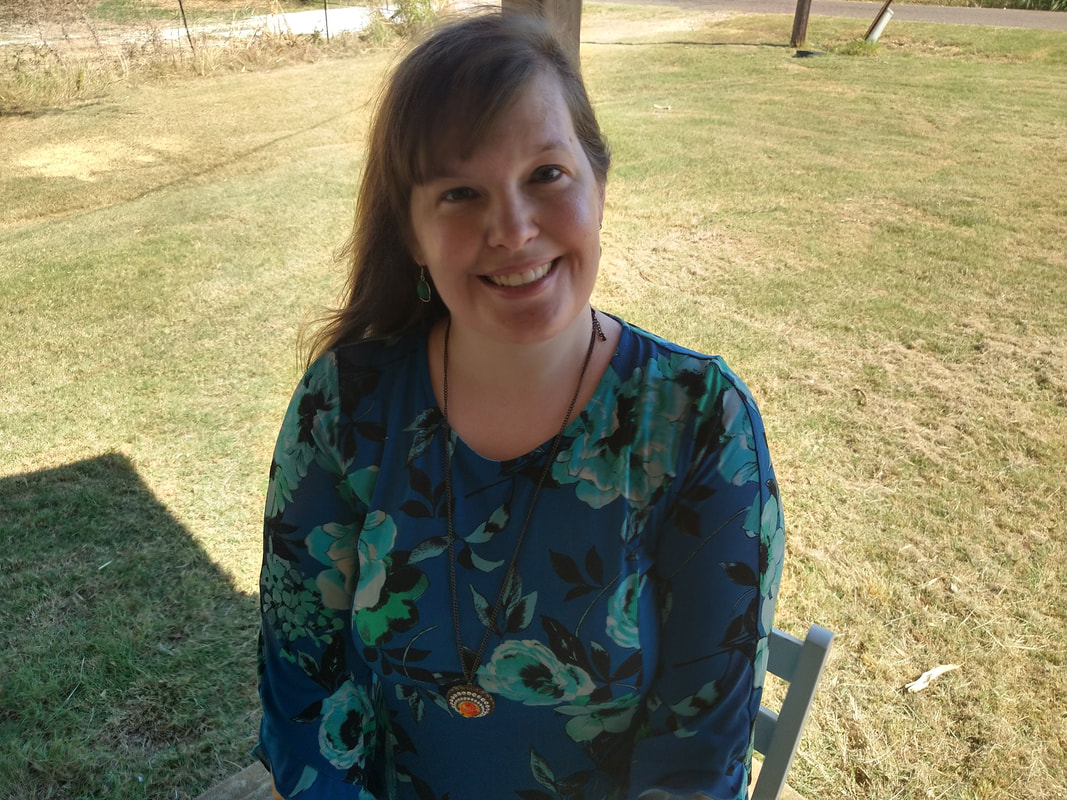
Sarah ScheeleJoin the newsletter below! This signup has no reader magnets attached but I am preparing a freebie to be offered as part of the welcome email in the near future.
Categories
All
Check out my list of Top 5 Best Children's Adventure Books About Family and Exploring I've Recommended on Shepherd.com!
Archives
June 2023
|